2026 年 3 月出版
科儀新知 第 246 期
人物專訪
國立陽明交通大學 — 林奇宏校長:讓科學有溫度—從實驗室到改變社會的距離 [ 下載 PDF ]
林麗娥
在臺灣公共衛生發展的關鍵進程中,有些政策不僅改變制度,更悄然改變無數家庭的命運。新北市自 2010 年率先試辦「新生兒免費聽力篩檢」,讓無數新生兒在出生之際,就有機會及早發現聽力問題。而這項影響深遠的政策推手之一,正是國立陽明交通大學 - 林奇宏校長。當時身為衛生局長的他,攜手預防醫學基金會執行長-蕭廣仁教授,積極推動此項前瞻性措施,並促成中央於 2012 年擴大至全國實施。這項制度的落實,不僅造福臺灣無數新生兒與家庭,更讓聽損兒能在關鍵時期被發現並及時介入療育,為其後續語言發展與社會適應奠定關鍵基礎。從政策推動到醫療科技應用,背後所體現的,正是強化全民精準健康的前瞻思維。也因此,在本期《科儀新知》第 246 期「精準醫療與生醫感測」專題中,我們特別邀請在顯微鏡學、細胞生物學、癌症生物學、生醫光電學與基因體學等領域皆有卓越研究成果的林校長擔任人物專訪嘉賓。透過本次專訪,一同深入了解校長從科學研究到公共政策的跨域視野與實踐經驗。
精準醫療與生醫感測
「精準醫療與生醫感測」專題介紹 [ 下載 PDF ]
林宗宏
在精準醫療快速發展的當下,醫療科技正從以往「患者出現症狀才進行診斷」的被動模式,轉向「預測疾病風險、提前介入」的主動模式;同時,診療方式也從單一檢測指標,發展為整合多種生理、影像與分子感測資訊的全面感知,藉以提供更精準、個人化的健康判斷與醫療建議。《科儀新知》246 期特別規劃「精準醫療與生醫感測」專題,期望透過跨領域的研究成果,呈現感測技術如何成為串聯臨床醫療、工程創新與資料科學的關鍵橋梁。承蒙邀請,本人擔任此次專題客座主編,集結領域內學者專家,分享其在生醫領域的重要成果與研究心得,藉以促進學術與應用的交流整合,並為臺灣精準健康研發注入更多前瞻能量。
本次專題特別邀請國立陽明交通大學校長-林奇宏教授擔任人物專訪嘉賓。專訪介紹了校長的職涯歷程與治校理念,展現其從醫學研究跨足公共衛生與大學治理的多元視野與跨域整合能力。
在研究成果方面,本期收錄多項具代表性的前瞻技術,展現生醫感測在「無創化」、「即時化」與「智慧化」上的重要進展。例如,國立臺灣大學醫學工程學系-林宗宏教授團隊所開發的「自供電仿生感測平台」,結合摩擦奈米發電機技術,能將人體微小機械能轉換為電訊號,突破傳統感測器對外部電源的依賴,為長時間健康監測開創嶄新可能。
此外,國立臺灣大學電子工程研究所-林致廷教授團隊提出「創新電雙層式電化學感測架構」,透過奈米間隙與垂直微井陣列設計,大幅提升感測靈敏度並克服量產瓶頸,使檢測極限達到飛摩爾等級,為高精度生物檢測提供關鍵技術突破。
在無創檢測領域,國立成功大學生物醫學工程學系-楊閎蔚教授所發展的「微針貼片平台」,能於無痛、微創的條件下取得組織間質液,應用於糖尿病管理、慢性腎病篩檢與發炎監測,為居家醫療與個人化健康管理提供更便利的解決方案。
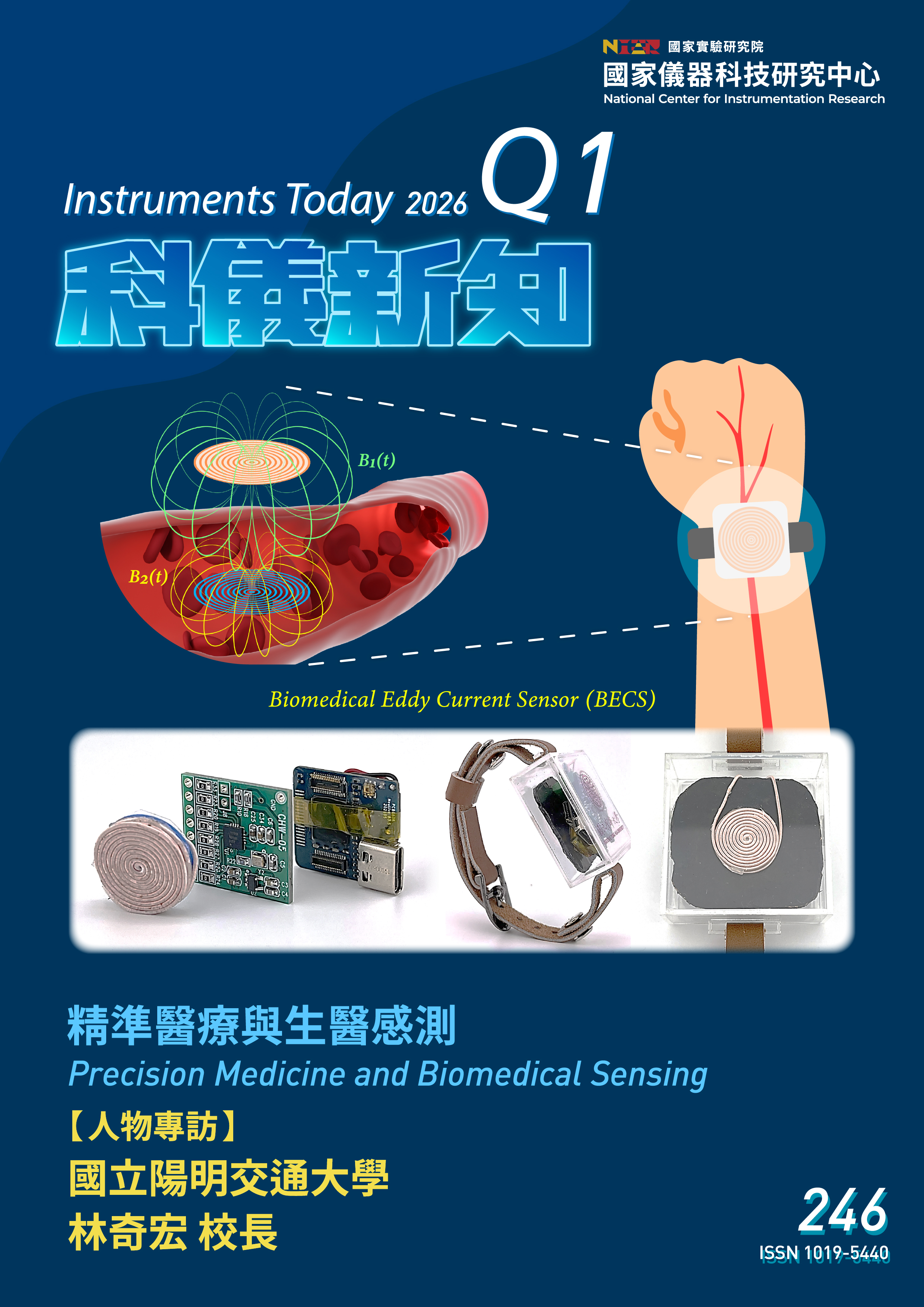
另一方面,國立清華大學生醫工程與環境科學系-王廷瑋副教授提出的生醫渦流感測技術 (biomedical eddy current sensor, BECS),以非接觸式方式量測心血管訊號,突破傳統光學量測對膚色與環境的限制,展現穿戴式裝置在連續健康監測上的應用潛力。
在感測平台的模組化與智慧化發展上,國立清華大學動力機械工程學系-王玉麟教授團隊的「延伸閘極場效電晶體 (extended-gate field-effect transistor, EGFET) 平台」,透過可替換式設計與 AI 模型整合,不僅提升檢測靈敏度,也大幅拓展其在臨床診斷與環境監測上的應用彈性。
針對臨床應用需求,國立臺灣大學生物機電工程系教授-盧彥文教授團隊開發的「線上尿毒素監測系統」,結合紫外光譜與資料驅動模型,即時掌握透析療程中的清除效率,減少侵入性抽血頻率,為精準透析提供即時決策依據。
最後,國立臺灣大學生物機電工程系-陳建甫教授團隊,運用生成式對抗網路 (Wasserstein generative adversarial network, WGAN) 與深度學習技術,突破醫療影像資料不足的限制,顯著提升快速篩檢結果的自動判讀能力,展現人工智慧在公共衛生與基層醫療中的應用潛力。
綜觀本期內容,生醫感測技術正朝向「更貼近人體」、「更即時反應」與「更智慧判讀」的方向快速演進。這些創新不僅回應了精準醫療對高靈敏度與高時效性的需求,更逐步實現從醫療院所走向日常生活的願景。唯有將工程、醫學與資訊科學深度融合,才能推動下一世代醫療服務的全面轉型。期望透過本專題的整理與分享,促進跨領域對話,激發更多創新應用,使科技真正走入日常生活,為人類健康帶來更深遠且具體的影響。
基於延伸閘極場效電晶體與生物技術整合之多目標感測平台於生醫感測及精準醫療之應用 [ 下載 PDF ]
王玉麟, 林家楷
此研究以延伸閘極場效電晶體為核心,並深度整合生物技術之多目標生醫感測平台。該平台採用可替換式延伸閘極設計,結合適體、抗體與分子篩等生物辨識元件,具備高度選擇性與模組化擴充能力,可靈活對應不同分析目標。在僅需 10 μL 樣本體積與 15 分鐘反應時間的條件下,本平台展現優異的電性靈敏度與穩定的定量表現,其檢測極限較傳統分析方法提升約一個數量級。
創新電雙層式電化學感測元件架構及應用 [ 下載 PDF ]
王虹翔, 謝秋哲, 薛孝廷, 林致廷
在生醫感測領域中,固液介面之電化學特性扮演著關鍵角色。雖然電雙層 (electric double layer) 電容變化可作為無標記檢測之物理基礎,但傳統技術往往受限於德拜屏蔽效應 (debye screening effect) 與溶液離子雜訊,難以在生理環境下精準捕捉微量生物分子訊號,導致在生物分子檢測應用上,還是以電化學阻抗圖譜 (electrochemical impedance spectroscopy) 為主要應用技術。為突破此物理極限,本文將聚焦於「奈米間隙」結構之發展,透過奈微米製程技術將電極間距縮小至亞微米尺度,迫使電訊號路徑由傳統水體路徑 (bulk water) 轉移至受表面電位主導之「近表面路徑」(solid-liquid surface),有效克服離子屏蔽干擾。在工程實現上,為解決平面奈米微影製程之量產瓶頸,具備垂直堆疊結構之「微井陣列 (microwell array, MWA)」應運而生。該架構利用半導體薄膜沉積技術定義奈米間隙,並藉由微井幾何產生之不對稱邊緣效應,將檢測極限可提升至數百飛摩爾 (fM) 等級。此外,針對介面長期穩定性難題,本文亦探討了氨基矽烷修飾層之失效機制,指出「去質子化」引發之自我催化水解為訊號漂移主因,並介紹「後固化質子化策略」作為解決方案。此系列技術整合了物理機制驗證、製程結構創新與表面化學工程,為發展下一代低成本、高可靠度之定點照護檢測 (point-of-care technologies , POCT) 系統提供了完整之技術路徑。
結合影像生成技術與深度學習於資訊不足時提高疾病快篩檢測結果判讀之研究 [ 下載 PDF ]
盧建銘, 陳建甫
人工智慧驅動的疾病診斷通常依賴大規模資料集,然而資料匱乏仍然是傳染病檢測的一大障礙。為了緩解這個問題,吾人採用 Wasserstein 生成對抗網路 (Wasserstein generative adversarial network, WGAN) 來提升低資料量情境下的診斷效能。透過引入基於 Wasserstein 距離的最佳化方法,該方法增強了訓練穩定性並提高了合成影像的品質。我們將此方法與使用分類神經網路的傳統資料增強方法進行了對比評估以實現快速、便攜且經濟高效的診斷。在僅使用一半原始資料 (n = 150) 的情況下,模型仍保持了 95% 左右的準確率,凸顯了其在資源有限環境下的潛力。
以多波長紫外吸收與資料驅動模型建立血液透析療程之線上尿毒素監測系統 [ 下載 PDF ]
張晉薰, 陳怡婷, 周鈺翔, 張正東, 林水龍, 盧彥文
在精準醫療趨勢下,血液透析 (hemodialysis, HD) 需要更即時的線上監測工具,以支援透析品質評估並降低併發症風險。本研究提出一套的尿毒素監測系統,利用紫外光 LED 多波長光譜技術,量測透析廢液 (spent dialysate) 的吸光度,並結合病患生理特徵與透析機台參數,透過資料驅動模型,推估多項尿毒素濃度。為了提升臨床解釋性與通用性,本研究建立了廢液推估值與血中濃度之對照模型,使其能直接對應臨床指標。經由 9 位末期腎病 (end-stage renal disease, ESRD) 病患、共 30 次療程之臨床驗證,結果顯示血中 BUN、肌酸酐、尿酸及 β2-微球蛋白的估測決定係數 R2 分別達到 0.953、0.952、0.959 與 0.822,展現高度相關性。本系統能有效降低抽血負擔,並提供即時、個人化的多分子監測數據,具備臨床決策支援之高度潛力。
微針貼片平台之無採血生醫感測器:從慢性病管理到行動醫療檢測 [ 下載 PDF ]
楊閎蔚
本文探討以微針貼片 (microneedle patches, MNPs) 為核心的無採血 (blood-free) 生醫檢測平台技術,旨在解決傳統血液檢測中具侵入性、需專業人員操作且耗時等痛點。文中整合了近期三項突破性研究成果,分別針對糖尿病、慢性腎臟病 (chronic kidney disease, CKD) 及傳染性與發炎性疾病,開發出創新檢測模組。一、智慧型糖尿病閉迴路管理:利用奈米酵素 (nanozyme) 與葡萄糖響應奈米囊泡 (IG-NVs),開發出具備「診斷與治療」雙重功能的閉迴路管理貼片。該技術可透過智慧型手機進行血糖定量,並視偵測數據實現智慧化胰島素釋放。二、慢性腎臟病快速篩檢技術:整合高溶脹性水膠微針與側向流試紙 (lateral flow cassette, LFC),實現了在 25 分鐘內透過肉眼判讀皮下組織間質液 (interstitial fluid, ISF) 中胱抑素 C (cystatin C, Cys C) 濃度的技術,大幅提升慢性腎病早期篩檢的便利性。三、「針尖上的實驗室 (Lab-on-the-Needles)」:利用 HRP@ZIF-8 訊號探針與可攜式檢測盒 (sensing box, SenBox),突破了高黏度檢體 (如唾液) 與皮膚原位發炎因子的檢測限制,將檢測場景從實驗室延伸至皮膚表層。這些技術成果展現了微針平台在定點照護檢測 (point-of-care testing, POCT) 與行動醫療領域的高度應用潛力,為未來個人化健康管理提供了更具效率且低門檻的解決方案。
生醫渦流感測技術用於廣泛膚色族群適應性之穿戴手錶應用 [ 下載 PDF ]
王廷瑋
現行穿戴式裝置多以光電容積脈搏波描記法 (photoplethysmography, PPG) 量測心率與血壓,但其效能易受膚色與光學條件影響。本文介紹一種可穿戴生物醫學渦流感測器 (biomedical eddy current sensor, BECS),透過線圈與生物組織間的電磁耦合,非接觸式量測心血管活動所引起的共振頻率變化。BECS 可整合於智慧手錶實現即時動脈脈搏、心率與連續血壓監測,並具備膚色不敏感,為光學感測之新替代方案。
會自己發電的感測器:自然啟發科技驅動的智慧醫療感測新平台 [ 下載 PDF ]
吳鶴笙, 洪晟淳, 林宗宏
近年來,智慧醫療與精準健康監測快速發展,但多數穿戴式或臨床感測系統仍仰賴外部電源與複雜電路,不僅限制長期連續量測能力,也增加裝置維護與臨床應用門檻。仿生設計結合摩擦奈米發電機 (triboelectric nanogenerator, TENG) 技術,提供了一種兼具自供電、高靈敏度與柔性結構且材料、設計多樣化的新型生醫感測解決方案。透過模仿自然界中如皮膚、鱗片與組織界面等結構與特性,可有效提升感測穩定性、訊號品質與機械耐用度,同時將環境或人體微小機械能直接轉換為電訊號,實現真正不需額外電池的智慧感測平台。本研究團隊已將此技術拓展至多項與人類生活與健康密切相關的生理活動監測情境,並結合資料分析與智慧化判讀,展現其於智慧健康照護與精準醫療中的潛力。本文將介紹此類自供電仿生感測技術的設計理念、關鍵工程挑戰、系統整合成果與未來發展方向,說明其作為下一代生醫感測與智慧醫療儀器平台的重要性。