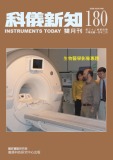
2011.2
About Instruments Today No. 180
Biomedical Imaging
The Applications of MRI in Central Nervous System [ 下載 PDF ]
Ying-Sheng Kuo, Chi-Jen Chen, Hsuan-Hei Wang, Wan-Chun Kuan, Cheng-Kun Tsai, Wen-Ta Chiu
The improvement in magnetic resonance imaging (MRI) technique has been the milestone of medical imaging in recent years. MRI becomes an indispensable tool in basic research and clinical medicine. Herein we introduce the basic principles of MRI and the newly developed techniques, including the perfusion, diffusion, and functional MRI, followed by their current applications in the central nervous system.
Nanomaterials for Biomedical Imaging: Applications and Perspective [ 下載 PDF ]
Yong-Chien Ling, Archana R. Deokar, Ganesh Gollavelli, Jen-Yu Liu, Meng-Chin Wu, Ya-Hsuan Hsiao, Pei- Ling Lee
The diversified development of nanotechnology accelerates the applications of nanomaterials for biomedical imaging and promotes the research and development of nanomedicine in diagnosing, treating and preventing disease. Herein, we categorize the nanomaterials into inorganic- and carbon-based class first, followed by briefly reviewing current applications and future perspective in biomedical imaging.
Structured Illumination Fluorescence Microscopy and Its Biological Applications [ 下載 PDF ]
Bo-Jui Chang, Li-Jun Chou, Su-Yu Chiang
Fluorescence microscopy enables biologists to observe the fine structures of specimens with great contrast and specificity through fluorescent labeling; however, the spatial resolution is limited by the diffraction nature of light. Several super-resolution fluorescence microscopic techniques related to confocal or wide-field microscopy have been developed based on various excitation strategies. Among them, structured illumination fluorescence microscopy (SIFM) that illuminates specimens with structured light, rather than the uniform light used in a widefield microscope, can attain a doubled resolution in three dimensions. At NSRRC, we have developed a 3D-SIFM system that uses a spatial light modulator (SLM) to shift and to rotate the illumination pattern rapidly and precisely, without mechanical calibration. Simulations of the optical transfer function of this SIFM system are also performed for Wiener deconvolution to improve image resolution. Here, we describe the concept of SIFM, introduce our newly launched SLM-based 3D-SIFM system, and demonstrate the prospective application to biological systems.
Positron Emission Tomography (PET) in Oncology [ 下載 PDF ]
Chung-Huei Hsu, Chung-Hung Shih
Positron emission tomography is a relatively new well-known imaging modality in medicine. A glucose analog, fluorine-18 fluorodeoxyglucose (18F-FDG, FDG), may accumulate within cells and is proportional to the rate of glucose transport and metabolism. Using FDG as a radiotracer, FDG-PET has high sensitivity and specificity for malignant tumor detection and assessment of the pathophysiology of the tumor. Clinical usefulness of FDG-PET include: (1) early detect and diagnose malignant tumor to avoid repeatedly using other diagnosing modalities (2) accurately stage and restage malignant disease (3) evaluate the effects of certain type of therapy (4) early assess the prognosis of malignant tumor. Images obtained with a combined PET and CT (PET/CT), PET and MRI (PET/MRI) scanner can depict exact anatomic landmarks, enable precise localization of metabolic abnormalities, and correctly identify physiologic, nonspecific uptake that would otherwise be mistaken for a malignant tumor. In the future, labeling of positron emitted isotope with developing biomarker, receptor, gene probe, stem cell, and drug for PET may reach a novel medical era.
Advance of Digestive Endoscopic Diagnosis and Treatment [ 下載 PDF ]
Chun-Chao Chang
The application of digestive endoscopy is not only for diagnosis but for therapy. Therapeutic digestive endoscopy is a minimal invasive treatment for gastrointestinal diseases. Minimal invasive treatment has advantage of less medical cost and admission period. Recently, many new advanced diagnostic digestive endoscopy techniques have been developed. These new diagnostic tools create a new field of early detection of gastrointestinal malignancy. Therefore, a better outcome of gastrointestinal diseases is expected.
The Application and Prospection of Scanning Electrochemical Microscopy on Biomedical Research [ 下載 PDF ]
Fu-Der Mai, Kung-Tien Liu, Tsui-Yun Lo, Hsiao-Ting Hsieh
The exits of protein and expression level play important roles of living organisms. Different proteins can regulation of single transduction and much different response on organisms. All the detection methods include western blot, enzyme-linked immunosorbent assay, fluorescence resonance energy transfer and flow cytometry. But these methods have some limitations and defect during analysis process. Go through by integration and combination of crosscutting on semiconductor industry - scanning electrochemical microscopy technology to application on biological protein analysis will get more sensitive and accurate detection results.
The Study of Pt-TiO2 Composite Electrodes for Photo-Assisted Methanol Fuel Cell [ 下載 PDF ]
Cun-Ting Lin, Hung-Ji Huang, Ming-Hua Shiao
Metal-titanium oxide composite material is one of the emerging research fields in photochemistry. In this study, platinum nanoparticles (NPs) and Pt thin film were coated on TiO2 NPs by adopting a simple photo deposition approach. The capabilities for photo enhanced methanol oxidation on electrodes with different types Pt coated TiO2 were investigated. In methanol oxidation test, the oxidation current found on the Pt NPs modified TiO2 electrode was magnificently boosted by about 50%, comparing to that of Pt thin film coated ones.
Measuring Acceleration by a CD/DVD Pick-Up-Head [ 下載 PDF ]
Jih-Wei Chieh, Shao-Kang Hung
CD/DVD pick-up-head is a well-developed and cost-effective component used in optical data storage devices. This article proposes a method to transform a CD/DVD pick-up-head into an accelerometer without adding any extra spring-mass system. An accelerometer needs a spring-mass system and a displacement sensing mechanism. The 4-wire suspended objective lens and the anstigmatic effect of a CD/DVD can fulfill the afore-mentioned requirement of an accelerometer. The experimental results show that the proposed accelerometer has a sensitivity of 130 V/g and the bandwidth is 20 Hz.
High Pulse Energy Picosecond Laser [ 下載 PDF ]
Joyce Kilmer, Santosh Pisharody, Brett Chiang
High Pulse Energy (HPE) Picosecond lasers are effective tools for processing a wide range of materials to replace the traditional mechanical process in optoelectronic and semiconductor. Compared to traditional nanosecond laser exhibit chipping/cracking to metals or composite materials, high pulse energy picoseconds laser have good ability on novel thin film solar cell material, copper indium gallium selenide (CIGS), which suffer thermal deformation from long pulse laser processing. Mechanically machining meso scale dimensions in one axis, but micro scale in the other is traditionally difficult. HPE ps laser enable such “Mesoprocessing” simply by defocusing, as the necessary ablation threshold is reached even when the beam is in the defocused state. In this article, we will introduce the benefit of this tool on the different material.
Low Friction-Jet Type Fast Closing Shutter [ 下載 PDF ]
Nien-Tsu Chen, Wei-Yao Hsu, Chi-Hung Hwang
This study proposes a novel idea of a fast closing shutter suitable for high energy beam lines of synchrotron radiation. The aim of this new design is to improve the defects of the old types. Metal bellows and linear bearings are adopted to reduce the friction effect during the shut-down stroke of the closure module. Taking use of compressed air with constant pressure as power source can avoid the decay of driving force in the shut-down stroke of closure module. Additionally, an engineering evaluation on the efficiency of the new design has been established by using the isentropic flow theory of a convergent nozzle.
OCT: Ready for Prime Time? Clinical Applications of Optical Coherence Tomography [ 下載 PDF ]
Takashi Kubo, Takashi Akasaka, Translated by Jai-Yen Chen
Optical Coherence Tomography is a technology that creates high-resolution images from live tissue specimen. The authors provided a summary of recent studies and concluded that this technology may be meaningful in histology, may enable a greater understanding to the pathophysiology of coronary artery disease and patient-specific therapeutic approach, and may have an important role in the future of cardiology.