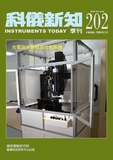
2015.3

About Instruments Today No. 202

Optoelectronic and Biomedical Inspection Technology

An Automatic Optical Inspection System Development for LED Chip Defects [ 下載 PDF ]

Ming-Fu Chen, Chih-Chung Chou, Chih-Wen Chen, Rui-Cian Weng, Hung-Ji Huang

According to collaborated customer's requirements, an optical inspection system for LED chip defects on wafers is developed to identify defects with size of greater than evaluated criteria. Inspection system is composed of an image acquisition device with high spatial resolution, a software package for image pre-processing and defect inspection, an inspection platform for precisely positioning. This LED chip defects inspection system consisted of an image acquisition device and a positioning platform, and modules of defect inspection, wafer positioning, image acquisition planning, and operations and management to achieve the capabilities and targets of automatically inspecting LED chip defects of electrode disconnection and flaws, and boundary collapses. Inspection system has a new designed opto-mechanical device with a spatial resolution of greater than 2 µm and wide FOV and integrated with a unique algorithm of auto-focusing integrated with illumination adjustment. Then the precisely focusing with suitable illumination for opto-mechanical device can be completed efficiently for wafer positioning and acquiring chip images with good quality. Thus based on the image acquisition device and the positioning platform, automatically wafer positioning can be completed precisely based on the registration methods in spatial frequency domain of acquired images. Therefore, image acquisition planning can be completed as well for continuous image acquisition and the chip defects inspection. This prototype of LED chip AOI system has been developed and tested preliminarily. The goals of our R&D project can be achieved to conduct the precisely wafer positioning, image acquisition and defect inspection for non-split LED wafers. But cooperative customer hoped this system can also inspect the chip defects for chip form LED wafers that have been split and plastered on bluefilm. And this requirement was accomplished as well. But this prototypical inspection system still has a few of issues and challenges need to be solved to meet customer's practical usages. For example, the spatial resolution of optomechanical device needs to be raised for LED chips with more narrow electrodes (less than 4 µm) to enhance the correctness of inspection. When performs the image acquisition for chip form LED inspection, there's the problem of positioning deviation at wafer boundary regions with un-split LED chips.


The Development and Applications of Semiconducting Polymer Dots [ 下載 PDF ]

Pei-Jing Wu, Ya-Chi Huang, Yang-Hsiang Chan

Semiconducting polymer dots (Pdots) have recently attracted considerable attention because of their extraordinary fl uorescence brightness, good stability, facile surface functionalization, and low cytotoxicity. In this article, we will discuss the chemical structures, synthesis, preparation, and photophysical properties of Pdots. Additionally, we will investigate the development of NIR-emitting Pdots for bioimaging and their applications for the detection of ions based on the recent works in our lab.


Uniaxial-Isotropic Metamaterials Constructed by Vertical-Type Split Ring Resonators [ 下載 PDF ]

Che-Chin Chen, Atsushi Ishikawa, Yu-Hsiang Tang, Ming-Hua Shiao, Din-Ping Tsai, Takuo Tanaka

Metamaterials have led to a fresh prospect in optical science. One can engineer their optical properties arbitrary through a particular design. In order to control the electromagnetic waves completely, the realization of three dimensional isotropic metamaterials is an arduous problem to overcome. In this paper, we utilized the vertical-type split ring resonators to construct an isotropic metamaterials. The transmittance spectra reveal the isotropic responses for any lateral rotation, polarization and incident angle up to 40 degree.


A Microfl uidic Chip for Mechanical Enzyme-Free Dissociation of Neurospheres into Single Cells [ 下載 PDF ]

Ching-Hui Lin, Don-Ching Lee, Hao-Chen Chang, Yi-Hsing Hsiao, Cheng-Kun He, Duane S. Juang, Chuan-Feng Yeh, Ing-Ming Chiu, Chia-Hsien Hsu

In this study, we aim to develop new platforms for neurosphere assay and single cell manipulation for neural stem cell research. Neurosphere assay is a common method for identifi cation of neural stem/progenitor cells, but obtaining single cells from dissociated neurospheres is difficult using non-enzymatic methods. We developed a microfl uidic-chip-based approach that utilizes fl ow and microstructures to dissociate neurospheres. Results show that this microfluidic-chip-based neurosphere dissociation method can generate high yields of single cells from dissociated neurospheres of mouse KT98 and DC115 cell models for 90% and 95%, respectively. The microfl uidicchip- dissociated cells had high viabilities (80-85%) and the ability to re-grow into neurospheres, demonstrating the applicability of this device to neurosphere-assay applications. In addition, the dissociated cells retained their normal differentiation potentials, as shown by their capabilities to differentiate into three neural lineages (neurons, astroglia, and oligodendrocytes) when cultured in differentiation culture conditions.


A Novel High-Throughput Proteomics Platform: The Micro-Western Array [ 下載 PDF ]

Chih-Pin Chuu

Micro-Western Array (MWA), a novel proteomics platform, is composed of GeSim Nanoplotter protein array, GE Multiphor, and Licor Odyssey infrared scanner. MWA is a high-throughput Western blotting assay which is able to detect the abundance and phosphorylated status of 384 proteins in 6 samples simultaneously. Including electrophoresis procedure allows MWA to avoid antibody cross-reactivity, which is a common problem in protein array. MWA is most useful for signaling transduction studying, molecular mechanism investigation, biomarker screening, and antibody validation. MWA will be a very useful tool for systems biology and biomedical research.


Case Study on the Bluetooth Low Energy Based Continua Glucose Monitor [ 下載 PDF ]

Yuan-Fa Lee

With the increase of health concept and the threat of aging population, medical device with communication ability becomes important functionality. Old healthcare facilities were private communication systems. These medical devices only connect to the specific gateway and server. The ISO/IEEE 11073 specifications adopted by the Continua Health Alliance are the international personal healthcare device communication standards. By these standards, the medical devices can intercommunication and exchange measurement data within a single system. The transport interfaces supported by international communication standards are USB PHDC, Bluetooth HDP, and ZigBee HC. Current the Bluetooth SIG proposes the Bluetooth LE technology with power consumption than traditional Bluetooth. The Bluetooth LE is possible used in medical devices with low data transmission. The design for the Continua BLE Glucose meter proposed in this paper is based on the TI BLE CC2540/41 chipset as well as the Continua Design Guidelines and ISO/IEEE 11073 Personal Health Device standard. The Continua BLE Glucose meter senses the glucose measurements from the users, and then transmits these data to the application hosting device and server in compliance with Bluetooth GATT-based data format and protocol standards via the Bluetooth Low Energy interface. Based on the testing results, users can transmit glucose measurement to any application hosting device certifi ed by the Continua Health Alliance over the Bluetooth LE interface successfully.


Development of Heat-Resistant Alloys Used in High Performance Aerospace Turbine Engine [ 下載 PDF ]

Sheng-Rui Jian, Mao-Sheng Chiu, Chen-Ming Kuo

This report contains two research methodologies being conducted in parallel to design an advanced DS Nibased superalloy, i.e. through computer simulation and practical experiments. We have used CM247LC as the base alloy to further improve its alloy chemistry by adjusting its materials parameters such as lattice misfit, volume fraction of ordered precipitates, volume fraction of carbide strengtheners, and phase stability. Alloy design has been conducted in this stage; Calphad-based JMatPro has been utilized to calculate the TTT curves, lattice misfi t as well as predictions for its tensile properties; Thermal-Calc was used to calculate Al activity to rationalize the oxidation resistances. In the second stage, specimens were prepared through the composition improvements by alloy design software Thermal-Calc and high temperature properties were evaluated. Experiment work includes (1) addition of Al element, (2) effects of solution heat treatment cooling rates. From high temperature oxidation test results, with 1wt% Al addition, the gamma prime volume fraction and oxidation resistance are improved significantly. In addition, the mechanical properties after high temperature oxidation are also influenced very note worthily. The effect of solution heat treatment cooling rates can affect the size and shape of gamma prime greatly, which have very strong effects on the high temperature creep properties of superalloys.