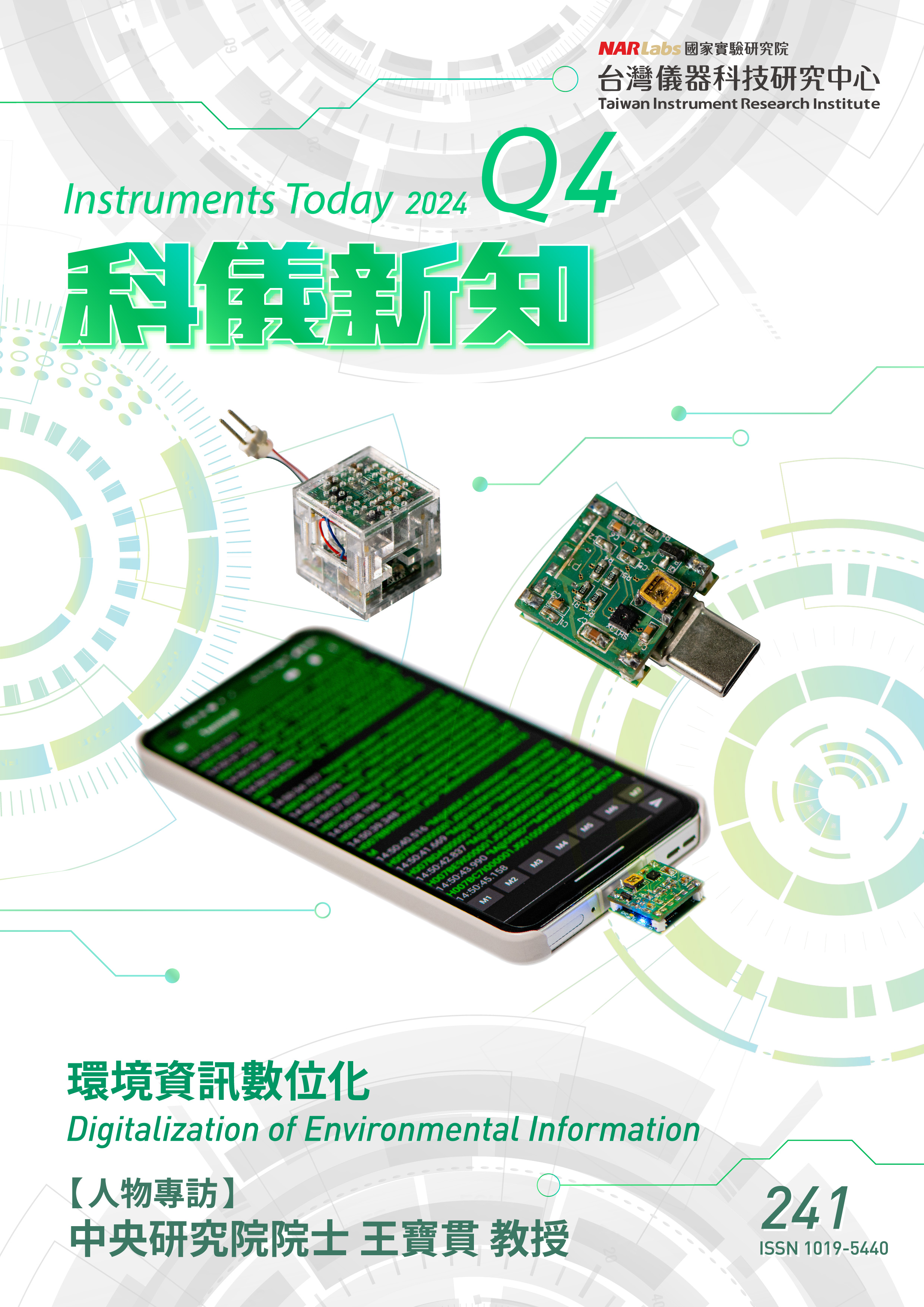
2024 年 12 月出版
科儀新知 第 241 期
人物專訪
中央研究院院士–王寶貫教授: 才思用盡時、就買個儀器(做實驗或會有新發現) [ 下載 PDF ]
林麗娥
AI 與數位化技術能夠分析和處理大量數據,提供精確的氣候預測和環境監測,因此在面對氣候變遷中扮演著關鍵角色,緣此《科儀新知》241 期推出「環境資訊數位化」專題,介紹各式環境預警與管理氣候變遷的技術。許多天氣的變化,都與大氣層中各種不同的物理過程有著密切的關係,只要抬頭觀測雲,就可以多少預知未來的天氣變化。本期人物專訪特別邀請在國際上以研究雲物理著稱,特別是雲中冰相粒子定量化研究,現任中央研究院院士-王寶貫教授。瞭解王院士是如何從兒時對中國古典文學的浸潤產生問題意識,應用雲物理等所學,進行歷史氣候研究,成功推算漢元帝時期極端氣候的成因。除此之外,王院士亦與讀者分享他為何「叛逆選擇」做實驗研究,從動手實驗中獲得樂趣與成就感。
環境資訊數位化
「環境資訊數位化」專題介紹 [ 下載 PDF ]
周崇光
天氣愈來愈熱,是我們最普遍感受到的氣候變遷。只是氣候變遷不單只是出現高溫,還有像是暴雨、洪災、熱浪、野火、空氣污染等。溫室氣體導致的全球暖化以及氣候變遷問題就在眼前,我們一方面要預防致災性天氣造成的損失,一方面也要防止生活環境品質的降低。透過 AI 與數位化技術來分析和處理大量數據,將有助於更精確地掌握氣象和環境變遷的趨勢。緣此《科儀新知》241 期推出「環境資訊數位化」專題,介紹各式環境預警與風險管理的技術。
許多天氣的變化都與大氣層中各種不同的物理過程有著密切的關係,本期人物專訪特別邀請在國際上以研究雲物理著稱,亞洲首位獲得歐洲劇烈風暴實驗室最高榮譽獎項-尼可萊.鐸切克獎 (Nikolai Dotzek Award) 的中央研究院院士–王寶貫教授。透過專訪,瞭解王院士如何細心關照日常事務,善用自己興趣與所學發掘問題、解決問題。
本期首先收錄之文章為國立臺灣大學生物環境系統工程所張斐章特聘教授團隊以「深度學習:環境資料數位化的應用」為題,介紹團隊應用深度學習技術於空氣污染、雨水下水道水位及微氣候預測,成功證明了 AI 模型在這些環境議題中的應用潛力。國立中央大學大氣科學系鄭芳怡教授聯合其他兩位老師,共同撰寫「大氣邊界層觀測、模擬技術與資料同化」,系統性地介紹觀測技術、數值模擬和資料同化在大氣邊界層研究中的進展,以加深對邊界層的理解並提升其預報能力。國立臺灣大學氣候天氣災害研究中心陳柏孚副研究員的「Deep-QPF:應用雷達觀測於臺灣深度學習短時降雨預報」專文,介紹了由臺大氣候天氣災害研究中心與中央氣象署共組之合作研究團隊所發展的 AI Deep-QPF 即時降雨預報技術,該 AI 模型能每 10 分鐘更新預報一次未來 3 小時全臺及鄰近海域範圍內之降雨趨勢以及小時累積雨量,協助氣象預報員及防災人員掌握最新的天氣情報,以提升對致災性降雨的監控和預警能力。國研院國網中心游輝宏副研究員等則於「民生公共物聯網資料服務平台環境資訊數位化」一文中介紹國網中心於「前瞻基礎建設-數位建設」的民生公共物聯網計畫中,如何建置「資料服務平台」,蒐集與儲存各部會針對空氣品質、地震、水資源以及災防等領域所建置的感測資料,並研發相關環境資訊數位化服務。
智慧城市的整體方案中,各式的感測器是不可或缺的關鍵元素,未來更可結合物聯網打造 AIoT 方案,建立即時環境安全監測網路。國研院儀科中心陳峰志副主任團隊推動之「微型感測器讀取電路與系統」專案,建立了氣體感測器公板系統,強調可配合不同材料特性的響應變化需求,從而提升對多種氣體的檢測精度與穩定性,進行電阻值變化的精準量測與校正,提供學研界感測元件開發與後續商品化介接。國研院儀科中心李龍正研究員則是以「高光譜應用於農業與水域的檢測」介紹儀科中心應用高光譜技術於精準農業及水域監測的研究工作,在碳匯研究、盤點固碳植物、減緩全球暖化時程等研究上,高光譜影像極具應用潛力。
環境資訊數位化能夠提供我們即時且精確的資料,因此在發展氣候變遷調適策略及提升環境品質上扮演著關鍵角色。盼透過本期作者群深入淺出的介紹下,激發讀者新的研究想法與方向,結合人類具備的科學理解、技術和政治經濟力量,建立預測模式、改善環境品質、進而提升我們的生活福祉。
深度學習:環境資料數位化的應用 [ 下載 PDF ]
邱普運, 王韻婷, 林雋傑, 劉佳儀, 張佑文, 張斐章
深度學習能精準捕捉資料中的非線性特徵和劇烈變化,實現高精度預測。本研究將其應用於多個環境議題,包括全臺灣的空氣污染、臺北市的下水道水位預測及溫室微氣候預測。空污預測使用了全臺灣環保署測站的歷史資料,涵蓋六個污染因子和兩個氣象因子,模型引入了注意力機制,成功解決傳統深度學習的梯度消失問題,顯著提升未來 72 小時的預測精度,誤差 (root-mean-square error, RMSE) 在 8.5 至 13.2 μg/m3 之間。在臺北市的下水道水位預測中,本研究採用了 DNN-AE 模型,能穩定預測未來 10 至 60 分鐘水位。在所有 DNNAE 模型中,C-AE 模型在結構上更具優勢,卷積層能有效提取時間特徵,特別是在處理時間變化資料時,能捕捉更細緻的趨勢,顯著提高預測精度,誤差 (RMSE) 在 T+1 至 T+6 為 0.21 至 0.51 m,預測結果最佳且穩定。對於溫室微氣候預測,本研究使用 XGBoost 對彰化伸港各微氣候因子進行特徵篩選,分析了溫度、相對濕度和光照強度等關鍵影響因素。結果顯示影響溫度、相對濕度和光照強度的主要特徵分別為溫度、短波輻射 (日射量) 和 RH,反映了捲簾和遮蔽系統對溫室內部微氣候的影響。結果顯示,ANFIS 模型在溫度預測方面表現最佳,R2 值超過 0.8,CNN 則在相對濕度與光照強度的預測上表現良好。綜合這些應用,臺灣的環境預測技術將能進一步推動智慧城市的發展,邁向更高階的數位化未來。
大氣邊界層觀測、模擬技術與資料同化 [ 下載 PDF ]
鄭芳怡, 王聖翔, 楊舒芝
大氣邊界層位於地表與自由大氣層之間,是受地表作用力影響而形成的區域,平均厚度約為一公里。邊界層內的氣象條件對於短期天氣系統的變化、長期氣候變遷以及空氣污染物的傳輸與擴散過程,具有重要影響。現代觀測技術,如探空氣球、無人機和微脈衝光達等,能夠提供邊界層垂直結構及氣象條件的詳細資料。除了觀測外,數值模擬也是解析邊界層演變過程的重要方法。目前,邊界層氣象模擬主要透過邊界層參數化方案或大渦流模擬進行。此外,資料同化技術結合邊界層觀測數據與氣象模擬,能有效提升氣象預報的準確性。本文系統性地介紹觀測技術、數值模擬和資料同化在大氣邊界層應用中的進展,以加深對邊界層的理解並提升其預報能力。
Deep-QPF:應用雷達觀測於臺灣深度學習短時降雨預報 [ 下載 PDF ]
陳柏孚
利用深度學習分析雷達等觀測資料,能精進即時 (< 3-h) 定量降雨預報技術,將人工智慧 (AI) 導入天氣預報實作,在人力專業化、預報精緻化、與作業即時化的趨勢下,增強氣象預報能力。Deep-QPF 深度學習模式,針對未來 3 小時之降雨進行雷達-降雨推估,並可有效地由不同途徑導入不同特性之異質資料,以改進降雨預報成果,尤以改進 0-3-h 降雨預報效果較佳。本文亦涵蓋 Deep-QPF 預報表現分析以及系統性誤差分析,顯示此 AI 預報技術具備投入實務預報使用之條件,將能強化臺灣對短時強降雨之防災應變能力。
民生公共物聯網資料服務平台環境資訊數位化 [ 下載 PDF ]
游輝宏, 陳威宇, 孫振凱
財團法人國家實驗研究院國家高速網路與計算中心 (以下簡稱國網中心) 於「前瞻基礎建設-數位建設」中的民生公共物聯網計畫中,建置「資料服務平台」,蒐集與儲存各部會針對空氣品質、地震、水資源以及災防等領域所建置的感測資料,除提供資料供應服務外,並研發相關環境資訊數位化服務,以滿足使用者對於感測資料的視覺化資訊需求。
微型感測器讀取電路與系統 [ 下載 PDF ]
林奕成, 蔡淑如, 陳柔甄, 蕭文澤, 陳峰志
本篇文章深入介紹微型氣體感測器讀取電路與系統的開發,該系統針對半導體式電阻型氣體感測材料應用進行設計,包括金屬氧化物、二維材料及奈米材料化合物等薄膜,這些材料因其高靈敏度、快速響應及對各種氣體的選擇性而被廣泛應用。本系統設計強調可配合不同材料特性的響應變化需求,從而提升對多種氣體的檢測精度與穩定性,進行電阻值變化的精準量測與校正。
高光譜應用於農業與水域的檢測 [ 下載 PDF ]
李龍正, 申雍
由於高光譜影像符合工業 4.0 精神,高光譜影像本身就是大數據,研究人員可憑藉這些光譜影像數據分析達成精準量測、預測,乃至於施作管理。本文以高光譜影像應用在精準農業及水域環境觀測為例,闡述高光譜在生態環境應用。
科儀專欄
鋰電池防爆預警檢測之研究 [ 下載 PDF ]
宜千鈺, 王聖璋, 蕭育仁
隨著鋰電池在全球市場的需求增長,其安全性問題成為關注焦點,特別是在電動車及儲能系統中的應用。為了應對鋰電池因過充、短路等引起的熱失控,本文探討了溫度及氣體感測器等多種安全監控技術,監測電池內部及周圍環境變化,降低鋰電池運行過程中的風險,延長其使用壽命與提升效能。研究表明,多元感測技術具有較高靈敏度與可靠性,適用於電動車與儲能系統等領域,為鋰電池市場的可持續發展提供了強有力的技術支持與安全保障。
科普大觀園
光的指揮家-探索光學薄膜的奧秘 [ 下載 PDF ]
陳柏荔, 莊子右, 陳宏彬
當問到專業的攝影師如何拍出一張好照片,除了要有好相機、好鏡頭之外,更需要懂得如何掌握好「光線」,而攝影時所使用的濾光鏡,可以幫助攝影師控制光的性質和色彩效果,遙測衛星上的光學鏡頭也不例外,需要加裝濾光鏡來獲得最佳的遙測成像品質,然而這類遙測衛星的元件卻是國際管制輸出的項目,是你有錢也買不到的,而買不到怎麼辦呢?只能靠自己開發!國家實驗研究院台灣儀器科技研究中心 (以下簡稱國研院儀科中心) 光學鍍膜團隊從設計、製作到測試完成,用了接近 10 年的時間,才打造出臺灣第一個自主研發用於衛星遙測系統影像感測器的「陣列式濾光鏡 (five-band filter)」。本文將探索成就陣列式濾光鏡的關鍵奧秘-光學薄膜,一起來好好認識臺灣的技術與驕傲吧!