2024 年 9 月出版
科儀新知 第 240 期
人物專訪
中央研究院院士–國立清華大學半導體學院 林本堅院長:把心放上去,用心則樂 [ 下載 PDF ]
林麗娥
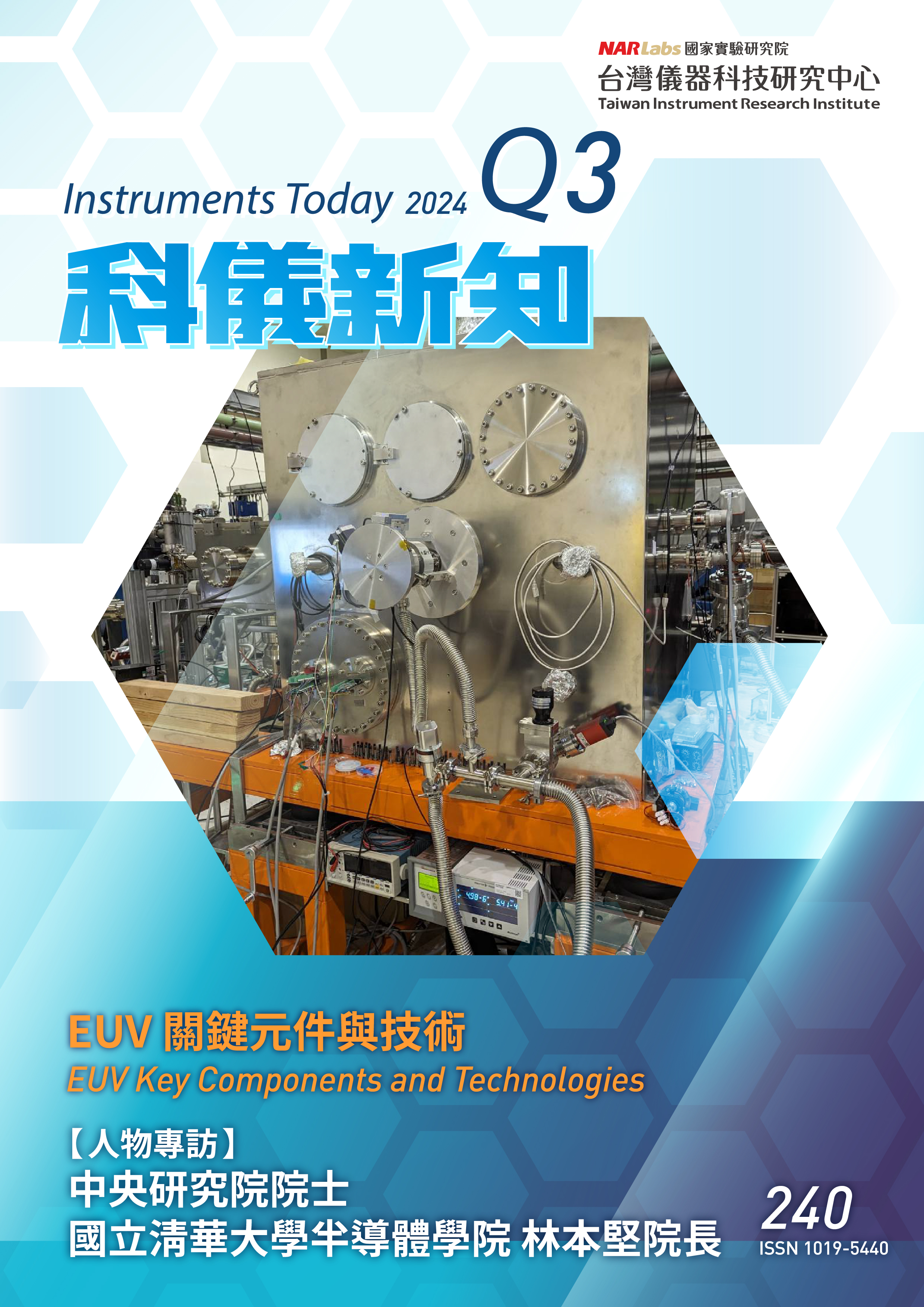
全球地緣政治影響加劇,頻頻擾動世界半導體供應鏈的環境。如何持續佔據關鍵位置,提高全球半導體價值鏈的韌性,是臺灣正面臨的重要課題。其中極紫外光 (extreme ultraviolet, EUV) 微影技術,是量產晶片時的關鍵製程技術,緣此《科儀新知》240 期推出「EUV 關鍵元件與技術」專題,介紹臺灣新興技術與發展現況。提到半導體技術的躍進,大家第一個會想到的必定是改寫全球半導體發展史、今年 (2024) 甫獲第六屆總統創新獎,被譽為「浸潤式微影之父」、「半導體界愛因斯坦」,現任國立清華大學半導體學院院長的林本堅院士。本期「人物專訪」特別邀請林院士與讀者分享,他是如何把心放在「光」的探索,且信仰如何讓他具有傳教士般的堅定信念,奔走國際、成功鼓吹,扭轉當時認為乾式微影才是正道,轉而採以水為介質的浸潤式微影技術 (immersion lithography)。
EUV 關鍵元件與技術
「EUV 關鍵元件與技術」專題介紹 [ 下載 PDF ]
許博淵
早在 1990 年代,美國多所國家實驗室即組成研究聯盟發展極紫外光 (Extreme UV, EUV) 微影技術,然而因該技術所涉及的光源、光罩、光學系統、光罩與光阻劑,均與既有的紫外光微影有巨大的本質差異,技術的發展遭遇許多瓶頸。直到千禧年代中期深紫外光浸潤式微
影技術逐漸面臨解析度的物理極限,全球的科研資源才重新聚焦 EUV 技術發展。
台灣的 EUV 微影技術研究始於 2008 年啟動的兩期 EUV 國家奈米計畫 (2008-2014),該計畫結合多所大學與研究單位合作,利用同步輻射 EUV 光源在該中心建構包括 EUV 反射儀、配備質譜儀的光阻釋氣分析系統、干涉微影與輻射損傷實驗站等,提供學研單位進行相關研究。2010 年台灣半導體製造公司購買第一台 EUV 微影商用機台,直到 2019 年正式投入 7 nm 晶片量產,期間該 EUV 國家奈米計畫所建置的重要量測設施,持續提供產學研單位進行 EUV 光罩、保護膜 (pellicle) 、光阻與感測器的關鍵材料性質分析與技術研發,協助台灣半導體產業在 EUV 先進微影技術領先全世界。
本期特別推出「EUV 關鍵元件與技術」專題,介紹國內在相關新技術的發展、現況與應用。其中,本期「人物專訪」特別邀請被譽為「浸潤式微影之父」,也是現任國立清華大學半導體學院院長的林本堅院士,從宏觀的角度與讀者分享他是如何突破技術瓶頸、說服各界改採以水為介質的浸潤式微影技術,這也是藉由技術創新翻轉半導體發展進程的成功典範。
在 EUV 技術方面,本期收錄由國立清華大學化學系劉瑞雄教授與國立成功大學光電科學與工程學系林俊宏教授等人合著之「EUV 干涉微影技術」,利用高亮度高同調性的同步輻射 EUV 光源,搭配自行製作的透射光柵光罩,以相對簡單的微影系統架構成功實現了 25 nm 半間距的線/間圖案。該技術目前已用於先進 EUV 光阻的微影品質評估,對於 EUV 光阻自主研發提供重要的科研技術。國立台灣大學電機系蔡坤諭副教授團隊撰寫的「EUV 光罩檢測技術」,除了簡介 EUV 光罩之製程、缺陷與檢測技術之現況,特別針對 EUV 光罩基底片製備過程之檢測技術做較深入之探討,並提出未來技術之發展方向。
台灣大學工程科學及海洋工程學系李佳翰教授團隊著述的「應用於極紫外光波段之柱狀多層膜反射鏡」,創新提出利用圓柱形鉬 (Mo) 和矽 (Si) 的混合結構多層,讓每層矽柱體都有空氣空間的多層柱面鏡,反射率可從傳統 40 週期 Mo/Si 多層的 74.5% 提高到 76.6%,有潛力在相同的 EUV 光源功率下提高晶片產量。
傳統矽晶片製成的 EUV 偵測器面臨著高能輻射損害和成本昂貴的問題,限制了其在實際應用中的普遍性,為此中央研究院原子與分子科學研究所特聘研究員張煥正教授團隊撰述的「極紫外光的感測與成像:螢光奈米鑽石的新應用」,首創以鑽石材料作為閃爍體,將 EUV 光轉換為可見光,不僅裝置體積小、成本低,同時能夠提供高效的成像功能。因應 EUV 微影時代的來臨,國研院台灣儀器科技研究中心卓文浩研究員團隊藉由國科會前瞻計畫的執行,建置一套「多功能式極紫外光微影元件檢測服務平台」,整合光罩、光阻、反射鏡等關鍵元件的分析檢測技術,提供產學研單位加速先進 EUV 製程技術開發。
為配合國內半導體先進微影技術發展,工研院量測中心/國家度量衡標準實驗室則啟動發展 EUV 波段光輻射量測與校正技術,該實驗室莊宜蓁研究員團隊於「EUV 計量標準與量測系統不確定度」一文中,特別介紹台灣第一套 EUV 波段之計量標準系統,希望透過此計量標準的建立,協助晶圓廠更精確地掌握曝光參數、精簡製程程序、進而達成節能之效。
此外,高品質、高功率、低耗能的 EUV 光源一直是微影技術發展中持續追求的目標。有別於目前商用的電漿 EUV 光源,國立清華大學電機工程學系陳明彰副教授論著的「桌上型同調 EUV 光源-超快雷射激發高次諧波光產生」,文中探討高次諧波的基礎概念和發現歷史,並闡述其在實驗設計中的關鍵角色,特別是如何生成高強度、孤立埃秒脈衝的技術挑戰。國家同步輻射研究中心劉偉強研究員團隊則在「加速器極紫外光源發展概況」一文中,除了介紹同步輻射及自由電子雷射的基本原理,並探討了能量回復直線加速器 (ERL) 和穩態微聚束 (SSMB) 技術在發展高功率 EUV 光源的發展前景。
先進半導體晶片是各種精密電子設備和人工智慧最關鍵的元件,不僅塑造現代生活方式,也對國際政治和全球經濟產生重大影響。先進半導體也是台灣護國神山級的核心技術,相關產業鏈在國內經濟產值扮演舉足輕重的角色。期望在本期作者群深入淺出的介紹下,激發讀者新的研究想法與方向,共同推進下一世代台灣半導體技術的新發展。
EUV 干涉微影技術 [ 下載 PDF ]
陳柏熊, 林俊宏, 劉瑞雄
在先進的半導體製程領域中,含金屬的 EUV 負光阻是一種具有高度潛力的未來技術節點材料。該材料可以通過 EUV 干涉微影技術 (EUV-IL) 進行評估。EUV-IL 在高解析度光阻的開發中扮演著重要角色,這些光阻在應用於量產的 EUV 曝光機之前能先被 EUV-IL 評估。目前的 EUV-IL 設置在國家同步輻射研究中心 (NSRRC) 的台灣光源 (TLS) 21B2 EUV 光束線上,並使用自行製作的 EUV 透射光柵光罩,成功實現了 25 奈米半間距的線/間圖案,這將可以用於先進的 EUV 光阻篩選,並對科學和業界的研究發展做出重要貢獻。
EUV 光罩檢測技術 [ 下載 PDF ]
李建霖, 蔡佳勳, 蔡坤諭
此篇文章對於極紫外光 (EUV) 微影技術所須之具多層反射膜結構之光罩,其製造過程中需要之檢測技術之發展現況做一簡介,並提出一些展望。EUV 光罩之製程設計可採用許多和傳統光學光罩製程類似的步驟與設備,本文先由此出發做一簡介與比較,並指出幾個檢測 EUV 光罩特別之處。之後針對 EUV 光罩基底片 (mask blank) 製備過程之檢測技術做較深入之探討,並提出未來技術之發展方向。
應用於極紫外光波段之柱狀多層膜反射鏡 [ 下載 PDF ]
王志中, 李昭德, 李佳翰
此篇文章對於極紫外光 (EUV) 微影技術所須之具多層反射膜結構之光罩,其製造過程中需要之檢測技術之發展現況做一簡介,並提出一些展望。EUV 光罩之製程設計可採用許多和傳統光學光罩製程類似的步驟與設備,本文先由此出發做一簡介與比較,並指出幾個檢測 EUV 光罩特別之處。之後針對 EUV 光罩基底片 (mask blank) 製備過程之檢測技術做較深入之探討,並提出未來技術之發展方向。
極紫外光的感測與成像:螢光奈米鑽石的新應用 [ 下載 PDF ]
吳沛婕, 張煥正, 楊騰毅
當今半導體業有賴摩爾定律來提升電晶體的性能,為了實現此一目標,極紫外 (EUV) 光刻是一項關鍵技術。EUV 輻射的波長短 (10-121 nm),製造商因此能夠在晶片上繪製奈米尺寸的電路圖案,推動半導體技術的革新,並確保摩爾定律的延續。隨著各種 EUV 輻射光源的產生,EUV 光束線的診斷變得至關重要,也成為熱門議題。本文探討了一項創新的 EUV 檢測器,使用螢光奈米鑽石 (FND) 薄膜作為閃爍體,將 EUV 光轉換為可見光,獲取影像。此裝置不會被高能量輻射損壞,非常適用於光束品質的評估和空間位置的監測,能夠提供全方位的資料,進行深入的分析與廣泛的應用。
多功能式極紫外光微影元件檢測服務平台 [ 下載 PDF ]
卓文浩, 吳品鈞, 李建霖, 黃羿誌, 李昭德, 蔡坤諭, 李佳翰
先進半導體製程已由 193 nm ArF 光源邁入 13.5 nm 極紫外光 (EUV) 時代,伴隨而來的是光學系統、光罩材料、光阻等全面革新。為因應此一技術轉型,本團隊建置了「多功能式極紫外光微影元件檢測服務平台」,提供光罩、光阻、反射鏡等關鍵元件的檢測服務。藉由極紫外光檢測技術之開發,以協助國內半導體產業克服 EUV 製程中材料與製程挑戰,加速先進製程技術開發。
EUV計量標準與量測系統不確定度 [ 下載 PDF ]
莊宜蓁, 陳政憲
為配合國內半導體先進微影技術發展,國家度量衡標準實驗室 (National Measurement Laboratory, NML) 啟動發展極紫外 (EUV) 波段光輻射量測與校正技術,首先進行的是EUV 光偵測器分光響應 (spectral responsivity) 校正系統與技術之建立,已與國家同步輻射中心 (National Synchrotron Radiation Research Center, NSRRC) 合作,建置相關硬體設備與量測系統,並執行相關量測系統評估與校正流程之測試。本文將以 EUV 光偵測器分光響應校正為例,介紹其系統架構、量測原理、系統追溯圖、及量測不確定度,希望透過此計量標準的建立,協助晶圓廠更精確地掌握曝光參數、精簡製程程序、進而達成節能之效。
桌上型同調 EUV 光源-超快雷 射激發高次諧波光產生 [ 下載 PDF ]
陳明彰
最近,超快速、同調 X 射線科學和技術受到廣泛關注,特別是由高次諧波產生的桌上型 X 射線。這些飛秒到埃秒的 X 射線脈衝使得科學家們能夠以前所未有的時間和空間解析度來觀察和理解化學反應、奈米材料的結構,以及生物分子系統的動態過程。本綜述將探討高次諧波的基礎概念和發現歷史,並闡述其在實驗設計中的關鍵角色,特別是如何生成高強度、孤立埃秒脈衝的技術挑戰。同時,將討論這些技術在觀察時間解析電子反應和空間解析奈米結構方面的重要應用,這些都是當今研究中不可或缺的部分。
加速器極紫外光源發展概況 [ 下載 PDF ]
劉偉強, 劉宗凱, 羅皓文
近年來,半導體產業在大量生產技術上取得了顯著進步,其中穩定可靠的極紫外光微影製程 (EUVL) 技術功不可沒。目前,商用 EUVL 系統中所使用的光源主要是利用二氧化碳雷射驅動錫電漿 (LPP) 產生 13.5 奈米波長的極紫外光,雖然其在滿足晶片量產需求上發揮了重要作用,但同時也面臨著如鏡片污染等技術挑戰。為進一步提升 EUVL 製程速度,增加光源功率是其中一個重要的方向。本文介紹了加速器光源技術的發展現況並討論在 EUVL 中的應用潛力。加速器光源,特別是同步輻射和自由電子雷射 (FEL) 隨著光子科學的興起而受到重視。同步輻射是高能電子在磁場中運動時發出的電磁輻射,具有寬頻帶、高亮度和高準直性等特點,已成為許多科學研究領域的重要光源。FEL 則利用電子束在聚頻磁鐵中與電磁場的交互作用產生高強度同調輻射,具備更高的輻射功率和無污染的優勢。FEL 的實現需要一系列關鍵技術,包括低發射度電子源、磁力束團壓縮器和微波直線加速器等。這些技術的發展為 FEL 提供了高亮度相對論性電子束,成為實現高功率 EUV 光源的基礎。半導體產業對高功率 EUV 光源需求的增加,也使得它們在 EUV 波段的應用受到許多關注。本文從同步輻射及 FEL 的基本原理到技術實現進行了討論,並探討了能量回復直線加速器 (ERL)和穩態微聚束 (SSMB) 技術在發展高功率 EUV 光源的前景。
科儀專欄
超解析度系綜繞射顯微術之簡介與發展應用 [ 下載 PDF ]
陳寧容, 陳健群
同調光繞射顯微術是一種不需要晶體的情況下,以同調光為光源,並以原子解析度成像微材料的顯微成像技術。然而由於缺乏高角度散射訊號,其空間解析度往往被限制在幾奈米。為了突破空間解析度的極限,我們提出了系綜繞射顯微術。該技術不僅提高了成像解析度,在光源的種類上也不再僅受限於同調光,並且對於樣品種類也有極高的相容性。本文將從頭介紹系綜繞射顯微術的理論推導並搭配不同光源以證明該技術的可行性,接著展示系綜繞射顯微術個別成功成像無機和有機奈米粒子。最後在結論的部分將總結此技術在材料結構學上的淺力。