2003.8

About Instruments Today No. 135

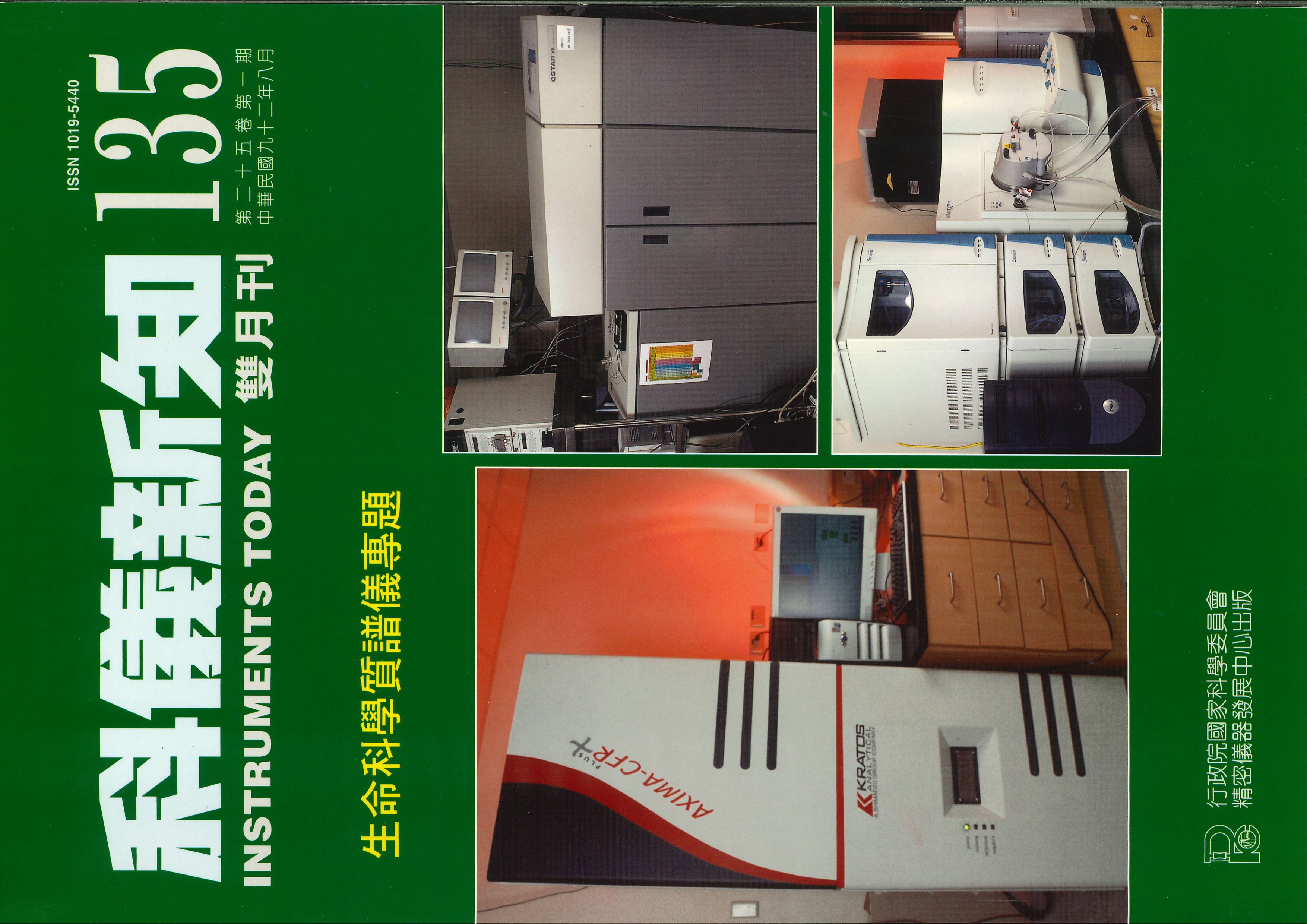
Mass Spectrometry in Life Science

The Two Biomedical Ionization Methods of 2002 Nobel Prize in Chemistry [ 下載 PDF ]

Pei-Jing Bai, Guor-Rong Her

Mass spectrometry (MS) is a technique with fast, sensitive and high identification capability. Ionization methods play very critical roles because gas phase analyte ions must be formed before MS analysis. Professor John B. Fenn of United States and Mr. Koichi Tanaka of Japan were awarded the Nobel Prize in Chemistry 2002 for their contributions in the development of soft ionization methods for biological macromolecules. Both electrospray ionization and soft laser desorption ionization methods can ionize biological macromolecules very effectively. This article will describe the development, theory, characteristics, and their contributions on biomedical analysis.


The Application of Mass Spectrometry in Clinical Medicine [ 下載 PDF ]

Chien-Chen Lai, Fuu-Jen Tsai

In recent years, the utilization of mass spectrometry (MS) in clinical medicine is undergoing considerable expansion. MS is highly useful for the analysis of biomarkers, ranging in size from small molecules with molecular masses generally less than 600 Da (e.g. amino acids, fatty acids, bile acids, steroids, saccharides, vitamins, organic acids, nucleotides and other metabolites) to higher molecular weight molecules such as peptides, proteins, glycoproteins, phosphoproteins, oligosaccharides and oligonucleotides. This expansion is largely due to extraordinary advances in MS developed in the previous decade. The coming of the ionization techniques such as electrospray ionization (ESI) and matrix assisted laser desorption ionization (MALDI) together with promotions in mass analyzers such as time of flight (TOF), triple quadrupole, quadrupole ion trap, quadrupoletime of flight (Q-TOF), has enabled MS to emerge as a powerful analytical tool in clinical medical screening (e.g. neonatal metabolic screening).


Applications of Liquid Chromatography Mass Spectrometry in New Drug Discovery and Development [ 下載 PDF ]

Du-Shieng Chien

Advanced technology of liquid chromatography-mass spectrometry has been widely applied in various phases of new drug discovery and development process. This article compares the applications of traditional HPLC with LC-MS and modern LC-MS/MS, etc. in the areas of pharmacokinetics and drug metabolism. Specifically, the article discusses the optimal advantages of using these instruments on the bioanalytical measurement of drug concentration and the structural identification of metabolites. Readers may consider this article as a brief guidance in selecting and operating appropriate liquid chromatography system coupling with mass spectrometry for their studies.


Ion Trap and Quadrupole/Time-of-Flight Tandem Mass Spectrometers and Their Applications in Proteomics Research [ 下載 PDF ]

Yu-Chang Tyan, Chien-Wen Hung, Pao-Chi Liao

This paper discusses the working principles of ion trap and quadrupole/time-of-flight (Q-TOF) tandem mass spectrometers and their applications in proteomics research. Both instruments can be used for tandem mass spectrometry (MS/MS); however, the former is operated in a tandem-in-time format, while the latter is tandem-in-space. Compared with ion trap that usually provides only unit resolution, Q-TOF has a much higher m/z resolving power up to 10,000. The components of these two types of mass spectrometers are described in detail. Two ionization methods, electrospray ionization (ESI) and matrix-assisted laser desorption ionization (MALDI), can be used in Q-TOF mass spectrometers, while only the former is commonly used in ion trap mass spectrometers.


Introduction to Electron Beam Lithography for Nanotechnology Applications [ 下載 PDF ]

Hung-Ling Yin, Shao-Chang Cheng, Yu-Hsin Lin, Yi-Chiuen Hu, Hsiao Yu Chou

Electron beam lithography plays a key role in next generation lithography. It provides the ability to fabricate various nanostructures and a gateway to communicate with the nano world. This paper presents the basic principles of electron beam lithography, the relative fabrication processes (including liff-off, deep etch, 3D lithography, and nanoimpront process), as well as its applications.


Automated Dissolution UV/Vis Fiber Optic in Situ Measurement System [ 下載 PDF ]

Yung-Shan Chou

The concept of the automated dissolution fiber optic in situ measurement system has been developed as a new automated dissolution testing recently. Since fiber optic measures the sample changes in situ without sampling with pump or assistance of traditional flow cell, errors resulted from sample collecting and transferring could be effectively avoided. Unlike the single wavelength measurement by conventional UV/Vis spectrometer, fiber optic in situ system offers the function of full absorbance scan. Operator could get more information from the spectra in a second. This article describes in depth the operational theory, sorts, features and applications for actual products of fiber optic in situ system, and will help improve awareness of the new technology.


Design of CW Nonlinear Mirror Mode-Locked Laser [ 下載 PDF ]

Y. J. Su, Y. C. Chen, S. W. Tsai, Y. F. Chen

Owing to the characteristics of high peak power and short pulse duration, the applications of CW mode-locked lasers will be much wider and wider especially in industry and medical treatment. This article will guide the readers based on fundamental theory of mode-locked laser from a general mode-locked laser to mode-locked mechanism of nonlinear mirror (NLM) and criteria of cavity design. By our study, the experimental results were coincident with our proposed theoretical analysis and prediction.


The Possible Applications of Transepidermal Water Loss (TEWL) in the Determination of Percutaneous Absorption in Occupational Health [ 下載 PDF ]

Tzu-Chieh Chou, Ho-Yuan Chang

Skin barrier function estimate is an important reference index in the evaluation of skin diseases and percutaneous absorption. Transepidermal water loss (TEWL) has been widely used as an estimate of skin barrier function. The authors gave a brief orientation of the principle of TEWL measurement and the component of the instrument in this article. Several studies using TEWL in the determination of the skin barrier function in dermatology have been also covered. In the end, the potential application of TEWL in occupational health has been addressed.


The Design of An Automatic Focusing Module for High Resolution Optical Remote Sensing Instrument [ 下載 PDF ]

Ming-Hung Huang, Tzong-Dar Wu, Fang-Hsuan Su

Focusing is one of the key issues in assembly techniques for developing an optical imaging system. When very high image quality is required for professional applications, the focusing performance places stringent demands on the configuration of the optic lens and the focal plane assembly (FPA). The development of the automatic focusing techniques can reduce the assembly time and provide high precision in fabricating the focusing mechanisms. In this paper, a sharpness measure is proposed for evaluating the focusing performance and image quality. Based on a simple searching algorithm, an automatic focusing module is developed and tested on an area CCD camera controlled by an integrated PXI system from National Instruments Inc.