2004.2

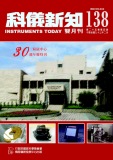
About Instruments Today No. 138

The 30th Anniversary of PIDC

Retrospect on the 30th Anniversary of PIDC [ 下載 PDF ]

Chien-Jen Chen


Vegetation and Change Detection Imager [ 下載 PDF ]

Hui-Jean Kuo, Ting-Ming Huang, Ho-Lin Tsay, Jyh-Jian Chen, Fang-Hsuan Su

VCDi, abbreviation of Vegetation and Change Detection imager, is an airborne multispectral remote sensing instrument developed by PIDC. This three years project has gone through design, manufacture, assembly, system integration, functional test, and the last, on-board function test. The ability of PIDC in developing airborne remote sensing instrument is showed.


Microspectrometer of the Payload for Picosatellite [ 下載 PDF ]

Chi-Hung Hwang, Tzong-Dar Wu, Ming-Hung Huang

The YamSat is the first CubeSat developed in Taiwan since early 2001. The program is managed by the National Space Program Office (NSPO), incorporated with Precision Instrument Development Center (PIDC) and other companies. The first objective of the YamSat is to qualify in space the components and technology developed in Taiwan. The second is to provide short message service through amateur radio communication frequency. And the third is to demonstrate the MEMS technology by using the micro-spectrometer payload developed by PIDC.


Technique Evolution of Panoramically Observing System [ 下載 PDF ]

Ho-Lin Tsay, Fang-Hsuan Su, Shiou-Gwo Lin, Tzong-Dar Wu

Panoramically Observing System (POS) is a pushbroom scanner operated on the ground. This system serves as a test platform for an already-developed remote-sensing telescope. It is also a remote-sensing instrument allowing PIDC engineers to perform system level tests. Due to high resolution of the images, calibrated POS can be applied to deformation monitoring of important building structures, such as dams or bridges.


Development of Photometer and Imager System [ 下載 PDF ]

Long-Jeng Lee, Shenq-Tsong Chang, Ting-Ming Huang

The development of photometer and imager system was derived from joining the study of science payload of ROCSAT II. The aim was to develop three bands (777 nm, 428 nm, 650 – 900 nm) of photometers and the imager for low level of light, and to verify the function of optical experiment of science payload. It can be applied to observation of red sprites on the ground. The development of photometer and imager system will be introduced, and other future application as well.


Development of Vacuum Technology at PIDC [ 下載 PDF ]

Chien Nan Hsiao

The development of vacuum technology has been accelerated with the growing semiconductorrelated industries in Taiwan. Precision Instrument Development Center (PIDC) plays a very important role in this progress. In the event of the 30th anniversary of PIDC, we will review our accomplishment in the system of vacuum equipments, pressure measurements, calibration, thin film processes, inspections, as well as the prospect of vacuum technology in PIDC.


Designs and Applications of Micro Optical Elements [ 下載 PDF ]

Hui-Hsiung Lin

PIDC began developing micro-lens and related application technology in 1997. Up to now, various crucial micro optics with multi-functions have been unceasingly and successfully carried out, including Fresnel µ-lens, beam shaper, far-field diffractive pattern generator, nondiffraction beam generator, dual wavelength and long focal length for picked-head objective lens, concave µ-gratings, µ-cylindrical lens, and so on. Notwithstanding the researches in PIDC are contributed mainly to the design and fabrication of micro optical elements, the above achievements have been exploited in the field of microsystems as well, which was exemplified by a microspectrometer and a µ-TAS. Our striving to develop micro optics during the last seven years has brought us fruitful results, such as the widerange application to bio-nano/microsystems, devices for the wave division demultiplexer, pickedhead systems for optical information, and many others in the fields of SciTech and engineering.


Development of Micro System Fabrication Technology [ 下載 PDF ]

Yu-Hsin Lin, Yi-Chiuen Hu, Hsiao-Yu Chou

The micro system fabrication technology including UV lithography, excimer laser machining, inductively coupled plasma (ICP) reactive ion etching, electroforming and hot embossing have been developing in Precision Instrument Development Center (PIDC). Recently, nano fabrication technologies have systematically developing in e-beam lithography and focus ion beam. PIDC has developed the capaility of nano/micro fabrication technologies in Taiwan.


Development of Aspherics Technology [ 下載 PDF ]

Chien-Shing Lee, Shyun-Kuen Lin, Ching-Hsiang Kuo, Liang-Ching Liao

Last December, Precision Instrument Development Center (PIDC), National Science Council officially announced the launch of aspherical lenses made from special materials for aerospace applications, such as 300 mm Zerodur® and 160 mm SiC lenses. The accomplishments of PIDC show that Taiwan has mastered the art of generating and polishing large aerospace-grade aspherical optical elements. This article reviews the development of aspherics technology and many popular applications. Hopefully, this article can be helpful for the researchers in this field and lay the foundation of the aspherics technology in Taiwan as well.


Mechanical Design and Manufacturing Practices for Instrumentation [ 下載 PDF ]

Fong-Zhi Chen, Chun-Tang Lin, Lian-Tzue Chen, Chien-Yao Huang, Jin-shyang Lin

In this paper, the mechanical design and manufacturing capabilities and the technical services of the machine shop of Precision Instrument Development Center (PIDC) are introduced. The instrumentation technology is related to many fields. It needs the original and innovative design concepts and the practical experiences. Mechanical design and manufacturing is an essential issue for the implementation of theoretics and the realization of advanced concepts. To support the academic researches and the industrial development, the machine shop of PIDC had established a series of design and manufacturing facilities. The machine shop is still strengthening its technical services and manufacturing capabilities. It aims to offer a better service process and play an important role in developing precision instruments in ROC.


Instrument Power Electronic Designs and Applications [ 下載 PDF ]

Tai-Shan Liao

In this paper, some apparatus were presented such as light emitting element driver employing single 1.5 V cell, 1000 V / 10 W high voltage module and bipolar high voltage amplifier. These products were applied by industrial companies and some universities. The transference of these techniques is welcomed.


Review of Nanometer-Scale Surface Analysis Technology [ 下載 PDF ]

Chien-Ying Su, Yu-Hsuan Lin

Scanning probe microscopy and near-field scanning optical microscopy are important technologies for nanometer-scale surface analysis, and are highly valued among industrial and academic research. The scanning probe microscopy provides atomic resolution, furthermore is applicable for analysis of properties such as electrical, magnetic, mechanical and many more. Near-field scanning optical microscopy overcomes the diffraction limit of the conventional optical resolution, and is extensively applied in the fields of biology, material science, physics and chemistry. These two technologies will be introduced in this article including basic principles, developments and applications in the years of research at Precision Instrument Development Center (PIDC).


Development of Vacuum Measuring Proficiency at PIDC [ 下載 PDF ]

Patricia Liao

The vacuum measuring proficiency plays a vital role in the field of science and technology today. The indispensable of vacuum measuring proficiency to SciTech and industry contributes to its growing importance for the world. To meet the academic, research and industrial demands on acquiring broad measuring scope and accurate data with vacuum measuring technology, PIDC set up the Vacuum Standard Laboratory with the aim to develop vacuum testing proficiency. In order to promote not only application and service of the technology, but also echo with the National Laboratory Accreditation policy, PIDC establishes ISO/IEC 17025 Testing and Calibration Laboratory Accreditation, which is designed merely for the laboratories in Taiwan, but compatible with those worldwide. Proudly to say, PIDC has passed the on site auditing and been awarded the certificate to earn trust from the public.